Random pics of weed

Please join our community to continue reading

Forgot your password?
Don't have an account? Register now
or

John Hall

Vegetating
Community Member
User ID
11317
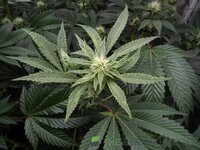
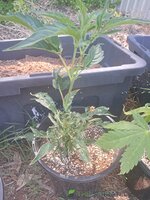
So, all the POTG x Apple fritter didn't pop except one and it don't look so well.
Well, it's been a couple years since I got it I think.
This is side to side comparison with Blackdeath x BH. same date.
View attachment 67657
Unfortunately I had the same well not quite I had zero germination from the potg x apple fritter seeds. Hopefully I will have better luck with the next lot of comp winners.
 

Goonie Goat

Baked
Staff member
Community Member
TSE Mod
User ID
3548
Joint Doctor / Sasha Przytyk,

1765885906889.jpeg
The Joint Doctor did not create the very first autoflowering plant (which is the naturally occurring Cannabis ruderalis subspecies), but he is widely credited as the breeder who created the first commercially successful and stable autoflowering cannabis strain, the 'Lowryder', released in the early 2000s.
Here's a breakdown:
  • Early experiments: The ruderalis subspecies, which flowers based on age rather than light cycles, was identified in Russia in 1924 and experimented with by various breeders (including Nevil Schoenmakers of The Seed Bank) in the 1970s and 80s. However, these early crosses were often unstable and lacked potency, failing to gain commercial traction.
  • The Joint Doctor's breakthrough: Using a stable ruderalis hybrid known as 'Mexican Rudy' (believed to have Russian ruderalis and Mexican sativa genetics), he crossed it with 'Northern Lights #2' and 'William's Wonder'. The resulting strain, initially dubbed 'Willy's Automatic' and then renamed 'Lowryder', was a consistent, fully autoflowering hybrid that finished in under 60 days.
  • Commercial success: While early 'Lowryder' plants were small and had lower potency, the stable autoflowering trait sparked a revolution in cannabis breeding by demonstrating the potential of these genetics. Other breeders, and eventually the Joint Doctor himself with the improved 'Lowryder #2', built upon this foundation to develop the potent and high-yielding autoflowers available today.
Essentially, the Joint Doctor launched the "Age of Autoflowers" by making the trait reliable and available to the mass market.
 

HomeBound_Hound

Baked
Community Member
User ID
455
Joint Doctor / Sasha Przytyk,

View attachment 68818
The Joint Doctor did not create the very first autoflowering plant (which is the naturally occurring Cannabis ruderalis subspecies), but he is widely credited as the breeder who created the first commercially successful and stable autoflowering cannabis strain, the 'Lowryder', released in the early 2000s.
Here's a breakdown:
  • Early experiments: The ruderalis subspecies, which flowers based on age rather than light cycles, was identified in Russia in 1924 and experimented with by various breeders (including Nevil Schoenmakers of The Seed Bank) in the 1970s and 80s. However, these early crosses were often unstable and lacked potency, failing to gain commercial traction.
  • The Joint Doctor's breakthrough: Using a stable ruderalis hybrid known as 'Mexican Rudy' (believed to have Russian ruderalis and Mexican sativa genetics), he crossed it with 'Northern Lights #2' and 'William's Wonder'. The resulting strain, initially dubbed 'Willy's Automatic' and then renamed 'Lowryder', was a consistent, fully autoflowering hybrid that finished in under 60 days.
  • Commercial success: While early 'Lowryder' plants were small and had lower potency, the stable autoflowering trait sparked a revolution in cannabis breeding by demonstrating the potential of these genetics. Other breeders, and eventually the Joint Doctor himself with the improved 'Lowryder #2', built upon this foundation to develop the potent and high-yielding autoflowers available today.

Essentially, the Joint Doctor launched the "Age of Autoflowers" by making the trait reliable and available to the mass market.
giphy - 2025-12-16T230220.258.gif
 

Goonie Goat

Baked
Staff member
Community Member
TSE Mod
User ID
3548

Breeding the Culture: Nevil Schoenmakers, The Seed Bank, and the Birth of the Cannabis Seed Industry​

1765887279110.jpeg
Nevil Schoenmakers (1956-2019) was an Australian cannabis breeder of Dutch heritage. Nevil helped to found the international cannabis seed trade in Amsterdam in the 1980s. Nevil’s work as a breeder, marketer, and seed distributor helped to transform how and where cannabis was grown by making acclimatized hybrids easily accessible.

NEVIL SCHOENMAKERS & THE SEED BANK OF HOLLAND 1765887332977.jpeg

In 1984-1990 Nevil founded and operated the Seed Bank. The Seed Bank established the international cannabis seed trade and set the examples that seed companies would emulate for decades to come. The Seed Bank was the first Dutch seed company to openly advertise in High Times magazine and ship seeds globally, including the US. Nevil and his partners established the model for how seed companies would operate, developing their own seed lines, as well as their own nutrient formula and flowers for the Dutch coffeehouses. By the late 1980s, the Seed Bank was conducting millions of dollars in business annually, distributing 100,000 cannabis seeds around the world.

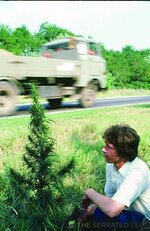
One thing that set Nevil and the Seed Bank apart during this time period was the way in which Nevil actively sought out exceptional and diverse germplasm from around the world. In the 1980s, after the Soviet invasion of Afghanistan, Nevil traveled to Pakistan to source Afghan genetics directly from the region, collecting the Mazar-I-Shariff seeds offered by the Seed Bank, both pure and hybridized. Nevil also collected seeds from feral stands of Ruderalis along the roadside in northern Hungary along the Russian border introducing day-neutral or autoflower genes into modern drug cannabis varieties.
1765887383293.jpeg
In addition to these and other traditional landrace varieties that Nevil sought out and collected in Holland and abroad, Nevil collected a wide array of early modern hybrids developed by growers and breeders in the United States. Nevil met David Watson in Holland in the mid-80s and purchased a number of hybrid varieties, including the Skunk no.1, the Original Haze, California Orange.

Nevil was able to source Northern Lights and other varieties from the Pacific Northwest through Greg McAllister and the Northern Lights crew.

Another important figure in the history of the Seed Bank and the dissemination of early elite hybrids from the US to Amsterdam was Jim ‘Dogless’ Ortega.

Nevil sourced many legendary clone-only varieties including the G13, Kush 4, and Garlic Bud, as well as seeds of the Maple Leaf Indica from Jim Ortega. The old Seed Bank catalogs, as well as Nevil’s many posts on Mr.Nice forums, document the many varieties and sources that came to found much of modern drug hybrids produced in Holland and distributed around the world since the 1980s.
1765887726593.jpeg

As a breeder, Nevil made significant contributions to the development of modern drug cannabis varieties.

Before finding a copy of Mel Frank’s Marijuana Grower’s Guide, which Nevil attributes to igniting his interest in growing and breeding cannabis, Nevil had experience breeding plants and animals. Nevil had participated in various breeding clubs. He brought this experience to his work breeding cannabis and often spoke of the importance of the pedigree method, transgressive selection for extreme phenotypes, and the development of “nicking patterns” common in animal husbandry.

Nevil worked with relatively small populations applying these concepts intensively, selecting and breeding with only the best expressions to create numerous elite modern hybrids.

Nevil breeding with haze selecting breeding parents and developing hybrids stands as one of his lasting legacies and impacts on modern cannabis. Nevil sourced original haze seed from David Watson after Watson came to Amsterdam in the mid-80s. For these seeds, Nev selected two breeding males Haze A and Haze C.

These selections were used extensively by Nevil (and others) to create many of the haze hybrids that have come out of Holland over the years from Northern Lights 5 x Haze, Jack Herer, Silver Haze, Nevil’s Haze, Super Silver Haze, Mango Haze, and Amnesia Haze.

In addition to his work with haze hybrids, Nevil also left a considerable legacy in the many classic Indica varieties that he collected, bred, and distributed.

The Northern Lights #1, Northern Lights #2, Northern Lights #5, the Hashplant, G13, Kush 4, Garlic Bud, Maple Leaf Indica, Hawaiian Indica, the Mazar, etc. These varieties were particularly well-suited to indoor cultivation and outdoor cultivation in the northern hemisphere. They produced uniform stout plants stacked with high-yielding potent flowers.

Nevil was also one of the first people to introduce day-neutral or autoflower genetics from Ruderalis into the modern hybridized-drug gene pool.

Nevil made a number of crosses with the Ruderalis and the Skunk no1, Haze, Northern Lights, and Dwarf Oaxacan. Nevil would go on to use the Northern Lights #1 x Ruderalis in his Northern Lights#5 backcross project. Nevil was thus one of the first to experiment with autoflower genetics.

Autoflowers have since come to dominate large sectors of the cannabis seed industry and will likely play an increasingly important role in future crop development.

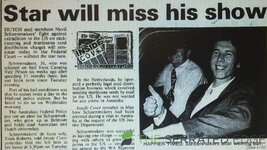
After High Times published the infamous Inside Cannabis Castle – the Incredible Story of the Man Who would be King of Cannabis article in 1987, the DEA officially took notice of Nevil and the Seed Bank.

By 1988 the DEA initiated the Special Enforcement Operation code-named Operation Green Merchant. Green Merchant targeted seed banks and grow shops that advertised in High Times in order to identify growers and disrupt the entire domestic cannabis market. On October 26, 1989, the DEA launched coordinated raids on grow shops across the country.

In 1990 Nevil was indicted by federal prosecutors on dozens of charges of conspiracy to commit drug trafficking after his American distributor – Ray Anthony Cogo – became a cooperating witness handing over pages, names, and addresses of thousands of Seed Bank customers. Nevil spent 11 months in jail fighting his extradition to the US, where he was facing multiple life sentences. In the end, Nevil was forced to sell the Cannabis Castle and the Seed Bank’s genetic library to Ben Dronkers of Sensi Seeds.
1765887597768.jpeg
Through the 1980s and 1990s, Nevil collected, bred, and distributed the cannabis genetics that forms the backbone of most modern drug cannabis varieties. Nevil’s willingness to take the risks to openly distribute cannabis seeds, making them easily accessible and widely available around the world, revolutionized cannabis cultivation, setting off an unprecedented and ultimately unstoppable wave of growers.
 

VinDeezle

Baked
Community Member
User ID
2953
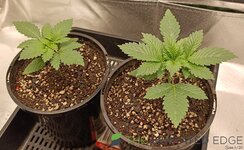
Could just be the strain, but the plants are definitely happier with more aeration and peat moss added to the mix (mix was very compost heavy). I've been foregoing adding perlite the last few runs (potting mix has a small amount already) and they definitely seems happier all round. Previously had to be a bit careful with watering as they'd get a bit droopy afterwards.
IMG_20251217_070737.jpg
Nearing two weeks in.
 

MoFo

Blooming
Community Member
User ID
989
Could just be the strain, but the plants are definitely happier with more aeration and peat moss added to the mix (mix was very compost heavy). I've been foregoing adding perlite the last few runs (potting mix has a small amount already) and they definitely seems happier all round. Previously had to be a bit careful with watering as they'd get a bit droopy afterwards.
View attachment 68835
Nearing two weeks in.
Looks like a good mix @VinDeezle
Is that some sort of slow release fertiliser (the red pellets)?
 

VinDeezle

Baked
Community Member
User ID
2953
Looks like a good mix @VinDeezle
Is that some sort of slow release fertiliser (the red pellets)?
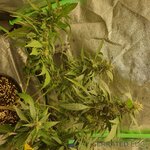
Yea the ultragrow platinum has some slow release and a bunch of decent shit in it, but it's a bit compost heavy on its own. Goes well cut with peat and extra perlite as the mix holds too much water on its own and the young taproots struggle to penetrate.

Won't fully sustain a plant all the way through flower in smaller 2-3 gallon pots, but decent in a way that I've only gotta feed once a week with something like power feed or fish/kelp come 3rd week flower.
Screenshot_2025-12-18-11-20-37-62_0311c9f6806a66343c45622522faa000.jpg
Goes a lot better with 5L peat and 2.5L perlite added to each 25L bag as the Coco content seems pretty low.
 
Last edited:
Top Bottom