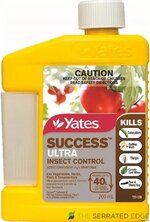
Yates success, $40 per 200ml bottle and only makes 40L. A measly 5g/L of spinosad.
View attachment 74721
View attachment 74720
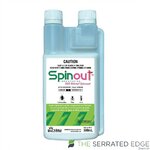
Spinout - 133g/L of spinosad, approx 1.88ml per litre to match the watered down dilution of Yates Success (5g/L).
So that ends up making ~266L of solution.
View attachment 74724
Product 1 - YATES SUCCESS (200ml, 5g/L)
- Cost per bottle: $47.47
- Spray yield per bottle: 40 Litre (at 5ml/L dose)
- Cost per Litre of mixed spray: $1.19
Product 2 (500ml, 133g/L)
- Cost per bottle: $200.00
- Spray yield per bottle: ~266 Litres (at 1.88ml/L dose)
- Cost per Litres of mixed spray: $0.75
While Product 2 requires a larger upfront investment, it yields over 6 times more active ingredient and is roughly
37% cheaper to use per mixed Litre of spray.
Spinosad, the active ingredient, is a microbial insecticide that is derived from a species of Actinomycetes bacteria;
Saccharopolyspora spinosa, discovered in soil samples. It is a fermented product, much like the more familiar
Bacillus thuringiensis materials we have become familiar with over the years, but lasts over twice as long as the best
B.t. on the market. It will provide a full week of protection for most pests on the label. It will also move through the leaf cuticle to reach leafminer larvae.
Spinosad has a broad-spectrum of activity against many of the worst vegetable pests including; the Colorado potato beetle, diamondback moth, cabbage looper, imported cabbageworms, European corn borer, fall armyworm, corn earworm, hornworms, thrips, and leafminers. Perhaps the most amazing part, is that this product works on many different types of insects (caterpillars, flies, thrips and beetles) but spares most beneficials such as lady beetles, predacious fly larvae (hover flies and midges), most parasitic wasps, lacewings, spiders, predatory mites and bugs. Which means that you may need to spray less often if you use this type of selective material, because the natural enemies will be preserved and should help moderate pest populations later in the season. It is toxic to bees when wet, but is relatively safe for them once it dries, so it should be used when pollinators are not actively foraging.




 (bonus savings from installing everything myself).