Growing on a tight budget

Beil

Curing
Community Member
User ID
3194
Yeah the carrier they use delivers pretty fast.
Their products are fine for the price but there's been some bad reviews on their aftersales support.
Example, if your driver shits itself they might send you a driver and expect you to replace the broken one and stuff like that.

But pretty sure everyone knows how to put a plug on a 3 core cable and connect DC output (red and black) together..

People can be quick to call the lights chinese shit but I've had zero issues with melting wires or broken drivers or diodes.
Yeah that'd be fine for me as long as they sent something. Most stuff is from China these days anyways regardless so it's not something I actively care about too much.
It's the same with 4x4 12v stuff... people go on about buying the most/more expensive stuff, my BIL actually said if I was going to get kings stuff to kit out my 4x4 I might as well not bother.... 2.5 years later, zero dramas and spent about 1/4 of what it would cost otherwise 🤷 (bonus savings from installing everything myself).
 

Please join our community to continue reading

Forgot your password?
Don't have an account? Register now
or

Goonie Goat

Baked
Staff member
Community Member
TSE Mod
User ID
3548
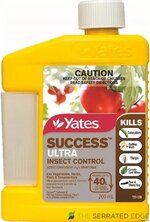
Yates success, $40 per 200ml bottle and only makes 40L. A measly 5g/L of spinosad.
1781782382770.jpeg
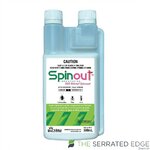
1781782345200.jpeg

Spinout - 133g/L of spinosad, approx 1.88ml per litre to match the watered down dilution of Yates Success (5g/L).

So that ends up making ~266L of solution.

1781782510789.jpeg

Product 1 - YATES SUCCESS (200ml, 5g/L)
  • Cost per bottle: $47.47
  • Spray yield per bottle: 40 Litre (at 5ml/L dose)
  • Cost per Litre of mixed spray: $1.19

Product 2 (500ml, 133g/L)
  • Cost per bottle: $200.00
  • Spray yield per bottle: ~266 Litres (at 1.88ml/L dose)
  • Cost per Litres of mixed spray: $0.75
While Product 2 requires a larger upfront investment, it yields over 6 times more active ingredient and is roughly 37% cheaper to use per mixed Litre of spray.

Spinosad, the active ingredient, is a microbial insecticide that is derived from a species of Actinomycetes bacteria; Saccharopolyspora spinosa, discovered in soil samples. It is a fermented product, much like the more familiar Bacillus thuringiensis materials we have become familiar with over the years, but lasts over twice as long as the best B.t. on the market. It will provide a full week of protection for most pests on the label. It will also move through the leaf cuticle to reach leafminer larvae.

Spinosad has a broad-spectrum of activity against many of the worst vegetable pests including; the Colorado potato beetle, diamondback moth, cabbage looper, imported cabbageworms, European corn borer, fall armyworm, corn earworm, hornworms, thrips, and leafminers. Perhaps the most amazing part, is that this product works on many different types of insects (caterpillars, flies, thrips and beetles) but spares most beneficials such as lady beetles, predacious fly larvae (hover flies and midges), most parasitic wasps, lacewings, spiders, predatory mites and bugs. Which means that you may need to spray less often if you use this type of selective material, because the natural enemies will be preserved and should help moderate pest populations later in the season. It is toxic to bees when wet, but is relatively safe for them once it dries, so it should be used when pollinators are not actively foraging.

 

HomeBound_Hound

🐶🐾
Community Member
User ID
455
Looking great. If you want I can send you a variable speed controller for your inline fan. Got some laying around from previous grow setup, also might be interested in this if you plan on expanding
I just found this on AliExpress:
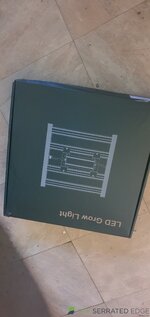
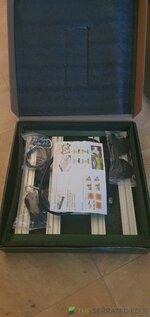
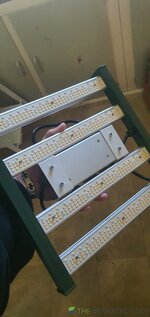
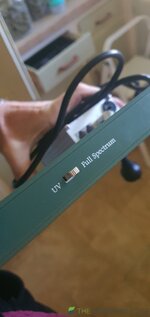
Full Spectrum LED Grow Light 120W LM281B Dimmable Plant Lights For Indoor Plants Flower Seedling Greenhouses Tent

@HomeBound_Hound Hound recently bought one, perhaps he'll give a review of it once he gets it
20260718_105655.jpg20260718_105711.jpg20260718_105749.jpg20260718_105759.jpg
View attachment 20260718_105948.mp4
Seems to work just fine outta the box
Nit bad for 45 bucks
 

frankreynolds

Curing
User ID
40
Yates success, $40 per 200ml bottle and only makes 40L. A measly 5g/L of spinosad.
View attachment 74721
View attachment 74720

Spinout - 133g/L of spinosad, approx 1.88ml per litre to match the watered down dilution of Yates Success (5g/L).

So that ends up making ~266L of solution.

View attachment 74724

Product 1 - YATES SUCCESS (200ml, 5g/L)
  • Cost per bottle: $47.47
  • Spray yield per bottle: 40 Litre (at 5ml/L dose)
  • Cost per Litre of mixed spray: $1.19

Product 2 (500ml, 133g/L)
  • Cost per bottle: $200.00
  • Spray yield per bottle: ~266 Litres (at 1.88ml/L dose)
  • Cost per Litres of mixed spray: $0.75
While Product 2 requires a larger upfront investment, it yields over 6 times more active ingredient and is roughly 37% cheaper to use per mixed Litre of spray.

Spinosad, the active ingredient, is a microbial insecticide that is derived from a species of Actinomycetes bacteria; Saccharopolyspora spinosa, discovered in soil samples. It is a fermented product, much like the more familiar Bacillus thuringiensis materials we have become familiar with over the years, but lasts over twice as long as the best B.t. on the market. It will provide a full week of protection for most pests on the label. It will also move through the leaf cuticle to reach leafminer larvae.

Spinosad has a broad-spectrum of activity against many of the worst vegetable pests including; the Colorado potato beetle, diamondback moth, cabbage looper, imported cabbageworms, European corn borer, fall armyworm, corn earworm, hornworms, thrips, and leafminers. Perhaps the most amazing part, is that this product works on many different types of insects (caterpillars, flies, thrips and beetles) but spares most beneficials such as lady beetles, predacious fly larvae (hover flies and midges), most parasitic wasps, lacewings, spiders, predatory mites and bugs. Which means that you may need to spray less often if you use this type of selective material, because the natural enemies will be preserved and should help moderate pest populations later in the season. It is toxic to bees when wet, but is relatively safe for them once it dries, so it should be used when pollinators are not actively foraging.

Just in regards to this check the active constituent see they aren't the actual same thing.

Spinotorem is the updated version of spinosad afaik. but both act systemically on plants so I wouldn't recommend them for cannabis personally.
 

Goonie Goat

Baked
Staff member
Community Member
TSE Mod
User ID
3548
Just in regards to this check the active constituent see they aren't the actual same thing.

Spinotorem is the updated version of spinosad afaik. but both act systemically on plants so I wouldn't recommend them for cannabis personally.
Spinout is a natural and organic insecticide made from soil bacteria.

I used spinosad tomato dust on all my vegetables outside and its worked wonders for white butterfly / caterpillar.

Maybe the yates stuff is somewhat synthetic but systemic doesn't necessarily mean it's harmful.

Synthetic Neonicotinoid pesticide applied directly before harvest would be harmful, but the active ingredient in spinout is spinosad
 

frankreynolds

Curing
User ID
40
Spinout is a natural and organic insecticide made from soil bacteria.

I used spinosad tomato dust on all my vegetables outside and its worked wonders for white butterfly / caterpillar.

Maybe the yates stuff is somewhat synthetic but systemic doesn't necessarily mean it's harmful.

Synthetic Neonicotinoid pesticide applied directly before harvest would be harmful, but the active ingredient in spinout is spinosad

Afaik it is synthetically made from a substance excreted by certain bacteria, it would be marketed as an organic insecticide if it was allowed to be in Aus.

It's a good chemical I use it to dust my veggies as well.

I'm pretty sure it's either heavily restricted or banned for use on Cannabis over in the states as it will show up in harvested flowers.

I personally wouldn't be using any systemic insecticide or fungicide even neem oil extract on my Canna plants. but ultimately it is up to you.
 

Goonie Goat

Baked
Staff member
Community Member
TSE Mod
User ID
3548
Afaik it is synthetically made from a substance excreted by certain bacteria, it would be marketed as an organic insecticide if it was allowed to be in Aus.

It's a good chemical I use it to dust my veggies as well.

I'm pretty sure it's either heavily restricted or banned for use on Cannabis over in the states as it will show up in harvested flowers.

I personally wouldn't be using any systemic insecticide or fungicide even neem oil extract on my Canna plants. but ultimately it is up to you.

That explains why the spinout is a bit more expensive compared to the Yates spinetoram,
I thought you were tarring both with the same brush for a minute, yeah I agree with you the less pesticides the better. Systemic synthetics have a pretty long half life in soils and can wipe out bee colonies if used.

I've been guilty of using imidacloprid right at the beginning of the grow sometimes just so gnats wouldn't wipe out my seedlings but now I have predator mites that do that for me.
 

frankreynolds

Curing
User ID
40
That explains why the spinout is a bit more expensive compared to the Yates spinetoram,
I thought you were tarring both with the same brush for a minute, yeah I agree with you the less pesticides the better. Systemic synthetics have a pretty long half life in soils and can wipe out bee colonies if used.

I've been guilty of using imidacloprid right at the beginning of the grow sometimes just so gnats wouldn't wipe out my seedlings but now I have predator mites that do that for me.
Yeh i shoulda be moer specific with which one i was talking about.

What bugs you battling anyways?
 

Goonie Goat

Baked
Staff member
Community Member
TSE Mod
User ID
3548
Just an update on progress with the nutrient recipe.
1000002509.jpg
Very pleased with the addition of monoammonium phosphate and high purity calcium chloride in place of monopotassium phosphate and calcium nitrate.

Compared to my original recipe I've noticed EC isn't as high using the MAP compared to MKP.

Maybe I'm talking out of my ass but I think Diamond Special T with the MKP pushes potassium up way too much when trying to bump phosphates up.

I've read a few articles explaining how weed actually doesnt need as much phosphates as what we are led to believe. So I could still be overdosing phosphate as there's a tiny bit of tip burn but nothing terrible.

The plants do not appear to be lacking nitrogen as there is plenty of ammonia based fert in both special T and MAP combined.
 

frankreynolds

Curing
User ID
40
Just an update on progress with the nutrient recipe.
View attachment 75774
Very pleased with the addition of monoammonium phosphate and high purity calcium chloride in place of monopotassium phosphate and calcium nitrate.

Compared to my original recipe I've noticed EC isn't as high using the MAP compared to MKP.

Maybe I'm talking out of my ass but I think Diamond Special T with the MKP pushes potassium up way too much when trying to bump phosphates up.

I've read a few articles explaining how weed actually doesnt need as much phosphates as what we are led to believe. So I could still be overdosing phosphate as there's a tiny bit of tip burn but nothing terrible.

The plants do not appear to be lacking nitrogen as there is plenty of ammonia based fert in both special T and MAP combined.
What ppm in soluton are you aiming for P?

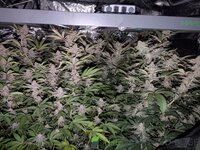
Plants look good.
 

Goonie Goat

Baked
Staff member
Community Member
TSE Mod
User ID
3548
Yeh i shoulda be moer specific with which one i was talking about.

What bugs you battling anyways?
I was always fighting gnats before I started reusing my coco.

While the rootballs were composting up the back the hypoaspis mites moved in and it seems like they're here for good now..

I've mixed some compost / manure into the coco with some other amendments, it's more like a coots mix now.

Besides a few spider mites I've never really had problems, I was only using imidacloprid as a precautionary but nature always seems to come out on top anyway, it took a while to figure that out, but yeah I've even seen a few parasitic wasps flying around in the tents too, I'm not complaining though haha
 
  • Like
Reactions: Roo

frankreynolds

Curing
User ID
40
I was always fighting gnats before I started reusing my coco.

While the rootballs were composting up the back the hypoaspis mites moved in and it seems like they're here for good now..

I've mixed some compost / manure into the coco with some other amendments, it's more like a coots mix now.

Besides a few spider mites I've never really had problems, I was only using imidacloprid as a precautionary but nature always seems to come out on top anyway, it took a while to figure that out, but yeah I've even seen a few parasitic wasps flying around in the tents too, I'm not complaining though haha
Ahh right, best thing i've done to combat gnats in coco is just to start undersizing pots, better control of dry backs which the gnat larvae seem to hate. But then you generally need some type of drip irrigation which adds a bit of complexity.

Other wise bacillus thurigensis subsp israeliensis as a preventative is the next best thing from experience with yellow sticky traps to catch adults and break the life cycle. but if the medium is consistantly moist its a hard battle to win
 

Goonie Goat

Baked
Staff member
Community Member
TSE Mod
User ID
3548
What ppm in soluton are you aiming for P?

Plants look good.
I wouldn't have the slightest clue, I need to keep some better tabs on things but I'm using about 30-40g per 90-100L of MAP, special T around 60-70g, 20 odd grams of Epsom salts and around 20-30g of calcium chloride.

I'm probably overdoing it but I'm sitting around 1.8 to 1.9 ec on a fresh res refill. First time using MAP instead of MKP and only just eyeballing it but so far so good
 
  • Like
Reactions: Roo

frankreynolds

Curing
User ID
40
I wouldn't have the slightest clue, I need to keep some better tabs on things but I'm using about 30-40g per 90-100L of MAP, special T around 60-70g, 20 odd grams of Epsom salts and around 20-30g of calcium chloride.

I'm probably overdoing it but I'm sitting around 1.8 to 1.9 ec on a fresh res refill. First time using MAP instead of MKP and only just eyeballing it but so far so good
1.9ec aint over doing with canna, especially under LED. i'm sitting around about there with my current grow and i think I'm being conservative hehe.

I had been wanting to add a bit of MAP to my mix when i was making my own not using a base like diamond t. But purely to add more anions to the mix to balance the cations of a high K mix and help keep the ph within the media and around the roots more balanced.

But since diamond t has some afaik i don't bother now.

I'd potentially have a look how much ammonium you are getting tho.


it can get toxic quickly
 

Goonie Goat

Baked
Staff member
Community Member
TSE Mod
User ID
3548
1.9ec aint over doing with canna, especially under LED. i'm sitting around about there with my current grow and i think I'm being conservative hehe.

I had been wanting to add a bit of MAP to my mix when i was making my own not using a base like diamond t. But purely to add more anions to the mix to balance the cations of a high K mix and help keep the ph within the media and around the roots more balanced.

But since diamond t has some afaik i don't bother now.

I'd potentially have a look how much ammonium you are getting tho.


it can get toxic quickly
Yeah I added quite a bit of zeolite to my mix too which helps with ammonia overload.
You should get some brix fix to try if you haven't, it's good shit with chelators which helps tremendously too I think
 

frankreynolds

Curing
User ID
40
Yeah I added quite a bit of zeolite to my mix too which helps with ammonia overload.
You should get some brix fix to try if you haven't, it's good shit with chelators which helps tremendously too I think
I know nutri techs stuff well. Triacontanol did interested me a long time ago, but from what i remember landing on ultimately the benefits don't outweigh the negatives in regards to it.

Still using nutri tech potassium silicate paid under $100 bucks for 5l of it over 5 years ago still have at least 3L of it, and is really the only additive I use now.

This run i got given an Australian version of mammoth P. so just a specific Bacillus species for unlocking locked up P. I don't mind different bacillus innoculants but I'm not necessarily convinced the cost is worth it.

Could be argued adding a bit of polyphosphate to my mix as P would help unlock locked up P in the medium just as well also help keep my irrigation lines clear.

ultimately i'm in the mindset that no additive or special sauce is better than quality genetics and quality growing enviorment (temps.rh/c02 levels/light etc.) and a balanced feed.
 

Goonie Goat

Baked
Staff member
Community Member
TSE Mod
User ID
3548
I know nutri techs stuff well. Triacontanol did interested me a long time ago, but from what i remember landing on ultimately the benefits don't outweigh the negatives in regards to it.

Still using nutri tech potassium silicate paid under $100 bucks for 5l of it over 5 years ago still have at least 3L of it, and is really the only additive I use now.

This run i got given an Australian version of mammoth P. so just a specific Bacillus species for unlocking locked up P. I don't mind different bacillus innoculants but I'm not necessarily convinced the cost is worth it.

Could be argued adding a bit of polyphosphate to my mix as P would help unlock locked up P in the medium just as well also help keep my irrigation lines clear.

ultimately i'm in the mindset that no additive or special sauce is better than quality genetics and quality growing enviorment (temps.rh/c02 levels/light etc.) and a balanced feed.

You seem to know a lot thats for sure. Did you study biology/horticulture?

Whats the Australian mammoth p product? You grow in living soil I assume?
 

frankreynolds

Curing
User ID
40
You seem to know a lot thats for sure. Did you study biology/horticulture?

Whats the Australian mammoth p product? You grow in living soil I assume?
i did study it over 10 years ago haha. once upon a time i was working in the commercial hort industry.

https://bbabio.com.au/products/max-phosphorus is the product just got given a tester from a hydro store. it's just Bacillus megaterium
, in the past I have used b amyloliquefaciens
I have only grown in coco for most of my life and still do. I am personally not a fan of living soil :P
 
Top Bottom